Sunday, November 23, 2014

Helping Families at Christmas Time


I love Christmas!  The tree, the lights, the gifts, the food, "the reason for the season,"and of course, Christmas sweaters!!!  But as we all know there are many of our families for whom this is just another day, a day without decorations or special foods or gifts.  Each year beginning in November I start collecting names of families who are in need of "holiday help."  Because I have been at the same school for many years, I am aware of who many of these families are and they know that our school always does something to assist and will call and ask if we can help them.  I am fortunate to live in a small town with very generous community organizations who offer their help during the Christmas season.

To collect names I begin by emailing all my teachers for the names of children they think could use the "holiday help."  Although I see all my students twice a month for classroom counseling, they see the children everyday.  They know who is wearing the same clothes day in and day out, who never has a coat or doesn't have a snack or can't afford the field trip.  Sometimes there are more names than sponsors and I have to improvise.  My teachers are wonderful about providing the names and even offering to buy gifts if at anytime I don't have enough community sponsors to cover all the needs.

Based on the number of names I receive, and of course it varies from year to year, I start matching them up with each organization by number of children or number of families.  I send home the Holiday Gift Info sheet ( I have it in both English and Spanish)  along with a letter of explanation
(also in both English and Spanish) which tells who sponsoring organization is and give a date for return of the gift info sheet and the pick-up date for the presents .

For the times that have more names than sponsors, or families who call me late, and I mean like after all the gifts are delivered and it is 2-3 days before we leave for Christmas break,  I sent out the
Wait List letter (English and Spanish) and let families know I will be looking for sponsors, but do not promise anything.  That's when my faculty rises to the occasion, offering to adopt a child or an entire family.  We are also doing a Holiday Food and Toy Drive sponsored by my fifth grade Leadership Club.  I send out the Holiday Food and Toy Drive fliers (English and Spanish) prior to Thanksgiving as many of our families will pick-up some Black Friday specials to donate to our drive. Then if needed, we use the toys donated to make sure each family who expressed a need gets some sort of gifts.  Those toys not used to supplement the needs of our own families are taken to the fire station to the local Toys for Tots collection.

I have done an Angel Tree in the past, but for our school this did not work and after only 2 years, we dropped it.  I know for other schools this has worked quite well but for us this was not the case.
I have also worked alongside the Salvation Army in regards to their Angel Tree.  They have graciously provided names of families from my school who are on their tree, so I am sure to provide resources to every family and avoid those who are already being served.

This is probably one of the busiest and most hectic times of year, and it can be easy to become jaded and scrooge like when you receive complaints or criticism for whatever gift-giving endeavor you attempt. Just remember to do the best you can, make no promises, and take care of yourself.

Merry Christmas!


Saturday, November 22, 2014

Important Facts for School Counselors of Students Identifying as LBGTQIA


I had an experience recently that troubled me.  Not because I couldn't or didn't handle it with caring and sensitivity, but because I had to handle it at all.  I did something thoughtless that caused one of my students to feel sad. And I knew it as soon as the words left my mouth.  

I was conducting a lesson on bullying and what it means to be an upstander versus a bystander. We were doing something I call the fist rating where students raise a fist then when I say "show me" they rate their actions or feelings about any number of things from 1-5 using their fingers 
(1 being the least to 5 being  the most).  We do this informal "assessment" often with students rating their own listening skills, those of their partner, or how they felt their group performed on a particular activity, to name a few.  During this particular lesson we were talking about how much courage it would take to be an upstander in a number of different situations. My goal was for the students to examine, for example, how much courage it would take to stand up to a bully or for a victim who is your friend, who is popular, is unpopular, is older, younger, bigger, or smaller. It was a lively discussion and the students soon saw that making a commitment to being an upstander might be easier in some situations than others.  
And then I asked THE question.  I said, "Girls only now, how much courage would it take...?" All the girls hands went up including that of one of my male students.  Several of the boys called him by name and said, "She said girls!" like they couldn't believe he misunderstood.  And then in that moment, I knew what I had done.  Fortunately, class was over a few minutes later, and this child ask to speak to me afterwards.  I was both complimented and saddened that he wanted to talk.  Complimented that he trusted me enough to share his very private personal struggles and saddened that I had caused him discomfort to have to, even for one moment, consider how he should respond to the question in our lesson.  When we were finally alone he said to me without hesitation, "Mrs. Maddox you know when you asked the girls to raise their hands, I did it because I feel like I am a girl.  I am questioning my gender."  I was not surprised by his statement as I have suspected this may be the case.  What I was surprised by was his honesty and the way he so freely shared and articulated his thoughts and feelings. Right then, I made a commitment to myself and my students to work on using using gender neutral language and  to examine other things I may be doing that are gender specific.

I have friends and family who identify as gay, lesbian, and bisexual. I have been to workshops and read articles about combating the prejudice of sexual stereotypes and creating an atmosphere of acceptance and support for all people. But nothing hits home and causes you to examine your everyday language and ingrained activities like one small boy responding from his heart and mind as a girl.

So it seems appropriate this week that my friend and Counselor colleague, Charlena Durrance, would be my guest blogger. She  recently prepared the following article for our county school counselor association newsletter.  Charlena is relatively new to School Counseling but brings a lifetime of unique experiences that have served her well as she counsels with students and parents.  She is a people person who has a rich background in business, direct sales, and fundraising, which is pretty handy for recruiting and gathering resources for her Title 1 school. Charlena is outgoing, outspoken, energetic, and has a wonderful sense of humor.  Her insights to her students and parents allow her to cut through the excuses and get to the heart of any issue.

 With her permission I am sharing her article on students identifying as LBGTQIA. Thank you Charlena for providing us with information to more effectively meet the needs of our students.


LGBTQIA What does it mean?
By: Charlena Durrance 
Elementary School Counselor 

When speaking with our students and their families it is important we become familiar with the terminology that is used to describe how they are seeing themselves through their sexuality. These are some of the more commonly used terms being used by our students today.
Lesbian – A female- identified person who is attracted romantically, physically, or emotionally to another female-identified person. Gay – A male-identified person who is attracted romantically, physically, or emotionally to another male-identified person. Bisexual – A person who is attracted romantically, physically, or emotionally to both men and women. Transgender – A person who is a member of a gender other than that expected based on anatomical sex. Queer – An umbrella term which embraces a variety of sexual preferences, orientations, and habits of those who do not adhere to the heterosexual and cisgender majority. (Cisgender is the opposite of transgender. It refers to individuals who have a match with the gender to which they were born.)  The term queer includes, but is not exclusive to lesbians, gay men, bisexuals, transpeople, and intersex persons.   Traditionally, this term is derogatory and hurtful, however, many people who do not adhere to sexual and/or gender norms use it to self-identify in a positive way. The letter Q can also stands for Questioning, for those who have not yet determined their sexuality. Intersex – Someone who’s physical sex characteristics are not categorized as exclusively male or exclusively female. Asexual – A person who is not attracted to anyone, or a person who does not have a sexual orientation. Ally – A person who does not identify as LGBTQIA, but supports the rights and safety of those who do.

A new school year provides each of us with the opportunity to do things differently, make changes and grow! Why not make this the year to focus on helping your students feel safe, respected and included in your classroom? Here are some important steps you can take right now to make your classroom or even your whole school more inclusive and safer for lesbian, gay, bisexual, transgender, questioning and intersex (LGBTQI) students.

SET THE TONE- Set Expectations that Cultivate Respect. Work with your students to set community expectations and agreements for the year so all students feel safe and included in your classroom. Ask students to hold each other accountable to their agreements and refer back to them often. Create LGBT-Inclusive Learning Environments. GLSEN’s (Gay, Lesbian Student Education Network) National School Climate Survey tells us that a vast majority of LGBT students were not taught positive representations of LGBT people, history or events in any of their classes. Get started with GLSEN’s guide to Developing LGBT-Inclusive Classroom Resources.  Support Gay-Straight Alliances (GSAs) GSAs, and similar student clubs, can have a huge impact on LGBT students and the entire school. No GSA at your school?  Encourage interested students to visit GLSEN.org/students for information, resources and guidance.

CONNECT with your students. Get up-to-date info in your inbox, there are many wonderful resources for you to refer: GLSEN’s Educator Network at action.glsen.org, Welcoming Schools.com to name a couple that I use. Connect with like-minded educators on Facebook or other social media outlets. Find a GLSEN or a PFLAG (parents, families, friends, and allies of LGBTQ) chapter near you.

REFRESH your skills and learn more by being an Ally to Middle and High School LGBT students. They are looking for acceptance in a safe environment. Provide them with a safe space.

CREATE RESPECTFUL ELEMENTARY CLASSROOMS. Foundations of respect and valuing diversity are key themes in most elementary classrooms. Make sure your efforts in this area are inclusive of LGBT issues and families in age-appropriate ways and take advantage of teachable moments. Ready, Set, Respect! is a program offered through GLSEN’s Elementary School Toolkit.   It provides tip sheets, resource lists and lesson plans focused on examining name-calling, gender roles and family diversity. Welcoming Schools is another great resource that will help assist you with the elementary school aged child and their families. Ask your teachers to do non-gender specific activities. You never know if you have a student who would feel more comfortable doing an activity that is not specific to the birth gender. We currently have students in our school district that identify with the opposite gender of their birth. By doing non-gender specific activities in the classroom, P.E. field and sports arena you will allow these students the opportunity to participate in activities where they would not have felt comfortable.

PLAN AHEAD
January: Celebrate Kindness in Your Classroom. On January 19-13, 2015, schools across the country will celebrate kindness by participating in GLSEN’s No Name‐Calling Week (NNCW).

April: Support one of the largest student-led days of action in the country.
Silence can be deafening. That’s why on April 17, 2015, tens of thousands of students across the country will pledge to remain silent for one whole day during GLSEN’s annual Day of Silence. They will call attention to the stifling effects of anti-LGBT bullying and harassment in their schools and communities.

October: Encourage Your Students to be Better Allies
During this year’s Ally Week (October 2015), students across the country will stand shoulder to shoulder with LGBT students against anti-LGBT language, bullying and harassment.

By working together we can make the changes that these and all students need in their lives. Be the change YOU want to see in the world.

Resources: GLSEN.org, Welcoming Schools.com. and Volusia Transgender Society.com

Saturday, November 8, 2014

Awesome iPad Apps for School Counselors

My time spent in professional development at the Florida School Counseling Association Convention include this great pre-conference session with School Counselor Daniel Turk, a 7th grade Counselor, at Osceola Middle School in Pinellas County, Florida.  His session, iHelp Too provided a great list of  FREE apps for use by School Counselors, students, and parents.  I have now downloaded them all and am slowly working my way through the list trying out each one.
He divided the apps into categories such as:  solo apps for academic skills, group/classroom counseling apps, individual counseling apps, special education apps and apps for parents.
Many of you may already be familiar with a lot of these apps.  There were quite a few I had heard of but a number I had not. This is just a sample of some of the great apps he shared with us.

Solo Apps
Duolingo Languages helps with the learning of  languages (covers most Romance languages) and placement tests.  Described as learning a new language on the go. Mini games test your skills in reading, writing, and speaking.  Earn badges, compete with friends, track your progress while learning up to 9 languages.


Flashcards+  is a great way to create and  review your own  flashcards or choose from millions of existing flashcard decks. App includes pronunciation help, shuffle feature, marking cards as learned, toggle between showing the term and definition.


iTooch Elementary School Math/Language Arts and Science is based on the US National Common Core and  has more than 18,000 exercises.  It is a fun way for students in grades 1-5 to practice and learn math, language arts, and science.


Group or Classroom Counseling Apps
Professor Garfield Fact or Opinion  Using an interactive story, Professor Garfield and friends help Nermal learn about good information and misinformation on the internet. The Fact-Bot  also helps Nermal learn the difference in fact and opinion.

Professor Garfield Cyberbullying  Professor Garfield helps Nermal get to the bottom of a cyber attack.  Students are asked to apply their knowledge to prevent becoming a victim of cyberbullying.  Students will understand the meaning of cyberbullying, reconize its different forms, learn strategies for handing cyberbullying, and the importance in getting the help of a trusted adult.

Professor Garfield Online Safety  Nermal connects with other comic book fans online and one in particular wants to meet in person.  Professor Garfield helps Nermal learn about keeping his personal information safe online. Students learn how to use the internet safely, that people are not always who they say they are, never give out personal information without adult permission, and that predators are always present on the internet.


 My Profession  Designed for 4-5 year olds, this matching game teaches children about the world of professions. Two matching type games (boards) are provided for free.  The additional ten boards are available for $2.99.
Puppet Pals HD Ages 4+  Pick actors and back drops, drag to the stage and tap to record.  Students can create and act out with puppets their original story with audio and video for playback later.  This could be a really great app for individual counseling too.  Sort of like a virtual play therapy using puppet characters for telling their story in a non-threatening way.


Individual Counseling Apps

Feel Electric builds emotional awareness and encourages self expression.  It introduces 50 emotion words and definitions, features three fast-paced vocabulary based games, includes a digital diary to record daily moods and a "zany" story maker.


Moody Monsters  ages 3-8.  Explore emotions and create your own moody monster.  Children can explore Monster Manor, play games, win Monster Merit Badges, take care of their monster friends and help them solve their problems. This app teaches about emotions and problem solving.


Unstuck offers personalized digital tools to help you move from stuck to unstuck.  This app helps you figure out why you are stuck, how you can get unstuck and action tips for getting unstuck.  This app definitely needs the guidance of the School Counselor.
 Breathe, Think, Do with Sesame Street   Ages 2-5
This bilingual app teaches children the breathe, think, do strategy for problem solving. Tap the monster to help him take deep breaths, think of plans, and try them out.


Fluid Monkey  Responsive pools of liquid such as ink in water, thick paint, gelatin, oil paint, wet mud and bowls of paint are good for one on one de-escalation and relaxation.


Zen Space   This virtual Zen garden sand tray allows you to relax while creating paths through the sand with different types of rakes.  Rocks and leaves may be added to create your own environment while listening to the sounds of  birds, sea, forest or rain.


Emotionary  An emotional diary tool designed for therapist or teachers who work with children and adolescents with ASD or similar mental disorders.  Helps develop understanding of emotions  necessary in the development of social skills and empathy.  Users take their own photo of a particular feeling and record  their voice and/or make a written entry.  Students can go back and reflect on previous feelings and situations.

Emotions Collections  Ages 2.5-8  Serious emotional story situations,  the first story about death is free, 5 remaining stories are $2.99 each or $3. 99 for the rest of the collection.  The stories are available in 7 languages and the narrator voice can be turned off or on.  You are are also able to record your own voice reading the story.  Thinking, talking, drawing activities are provided at the end of the story for deeper understanding.  Anna and Pete are the main characters who learn to recognize and put into practice different feelings such as death, anger, happiness, sadness, fear, and worry.

Counselor Tools
120+Mental Disorders This app describes disorders and  allows you to search specific disorders.  It's like a mini DSM for your pocket.  Provides alphabetical listing of understanding for over 120 disorders.  Short articles provide a brief introduction, discuss symptoms, diagnosing,  and common and alternative treatments. The user is able to search by disorder, email information to others regarding certain disorders, post to Facebook, or mark articles as favorites. The disclaimer states this app is for information and educational purposes only.


World Lens  gives translations on the go.  This app uses your built in video camera in real time to translate any sign in one of six languages into your own language.  No network is required, it gives results immediately anytime, anywhere.  Translations are not perfect but you get the general meaning.  Does not recognize handwriting or stylized fonts.


Special Education
SeeTouchLearn   A picture card system for learning new words and concepts and fostering self expression.  This app combines the effectiveness of picture cards with the interactivity of the iPad. Custom lessons may be created using this starter library .  Fifty additional libraries with over 4,400 pictures and 2,200 exercises are available for purchase from $ .99 for individual libraries up to $34.99 for the entire library.
Model Me Kids  Great tool for helping a child learn to navigate challenging locations in the community. Each location contains a photo slideshow of children modeling appropriate behavior.


Autism Emotion Music and a photo story slideshow are narrated to help teach about different emotions (happy, sad, proud, calm).  May advance manually or set for automatic.


Moody Jigsaws for Kids Lite  Students learn about  four different emotions by putting puzzles together of various feelings.  A memory game is also included.  Children earn stickers every time they complete a puzzle.  The full version including i additional emotions is $.99.


Verbal Me Free  (also available in Spanish) This might be a good one for some of the selective mutes we work with. Nonverbal students can tap a button and the iPad will speak the text aloud in the voice of a girl or a boy. This free version includes 14 screen choices including: yes-no, A-B-C, 1-2-3-4-5, happy-mad-sad, day-night, bullying, weather, colors, fruits, letter sounds and an on screen keyboard that allows students to type their thoughts and the iPad reads their words aloud.


My Emotions Free  A storybook about a variety of emotions using a cute cartoon face with self flipping pages or manual setting.  At the end of the story is a memory matching game.


Vola Friends  Shows a variety of culturally diverse real faces expressing a variety of emotions. This app helps children to develop emotional facial recognition. You could ask a child to to touch the one that is...                                                                                                                                                                                      


Emopedia  This app reads like an encyclopedia, covering 62 different emotions.  Each emotion is depicted with faces with a slider underneath to change the face from the minimum to the maximum feeling of a particular emotion.  This app includes images, facts, professional actor,s and an original soundtrack to help you find everything you need to understand and experience even the most subtle shades of mood and feeling.  Includes the purpose of a particular emotion, why people experience it, recognizing it, and learning to control feelings.


For Parents
Sesame Street Divorce Provides parents and caregivers with tools to help children 2-8 cope with the many transitions related to separation and divorce.  This is really more of a primer or "how to for parents." It includes videos from Sesame Street, articles with tips and strategies, conversation starters, and interactive tools such as face maker and coloring pages.  Sesame Street recommends the caregiver use the tools and view the videos first to choose what is most helpful and relevant for the family.


Sesame Street Military Families  All of Sesame Street's resources in both English and Spanish can be found right here.  Because of the sensitive nature of this topic it is recommended that a parent or guardian previews materials before co-viewing with the child.
This  app is not appropriate to give a child to sit down and do alone, parental support and supervision are needed. Topics covered include deployment, homecoming, injuries, grief, and self-expression.


Sesame Street Incarceration This app is designed for parents and caregivers of children 3-8 to cope with the transitions related to a parent's incarceration. Pre-viewing and co-viewing are recommended to choose what is most relevant to the family.  A tip book provides parents and caregivers with age-appropriate language to talk honestly with children, videos of real families and Muppets, and an interactive story book and photo activity for caregivers to use with children.


I know this is a long post, but there were so many great apps to share and I know there are hundreds more out there and more being developed every day!  Do you have apps not mentioned here that you use on a regular basis?  I would love to hear about them and add them to my growing app library.  Please feel free to share your favorites!

Sunday, November 2, 2014

Step by Step Instructions for Creating Google Forms


Last weekend was our state convention  and the 50th Anniversary of the Florida  School Counseling Association.  It was a  great weekend filled with wonderful break  out sessions, inspiring key note speakers,  fantastic relevant professional  development, and sharing with my  Counselor Colleagues from around the  state.


Teresa, Treva, Jeannie and Brian ready to present.


At the FSCA Convention, I had the  opportunity to present with 3 of my  Counselor Colleagues from the Volusia  School Counselor Association.  Each of us  shared a best practice from our School  Counseling program.

Since I have spent alot of time reading about, designing,  sharing, and using Google forms, I  presented a PowerPoint with step by step  instructions to help School Counselors  begin creating their own. Many School  Counselors are already successfully using  Google forms everyday, others would like  to but are not sure where to start.  I hope  my  PowerPoint with its screen shots and  step by step instructions will encourage  anyone who has been hesitant to start using  this wonderful tool.

 We are part of a data driven profession  and too often School Counselors do not  have the specific data we would like to  show how our services are being utilized,  or what faculty, students, or parents are  indicating are their needs.  Regular users  of Google Forms can tell you these are just a few of the ways you can use forms to collect data to enhance your School Counseling program. Creating and using Google forms not only provides process, perception and outcome data, but visual representations in graphs and charts that can be shared with all the stakeholders whose decision making may impact your School Counseling program.


Happy 50th Anniversary FSCA!
Dr. Trish Hatch, prolific author and renown Counselor Educator, said at a FSCA session, "Principals don't know what we do or what they can count on (from us), so they assign the tasks that need to be done that may have nothing to do with School Counseling."  What better way to begin to show our administrators what we do than by using Google Forms?
 

Go ahead, get started, you have everything to gain!

Do you use Google Forms in your School Counseling program?  What types of forms have you designed to collect data for your program? I'd love to hear your ideas and comments!

Saturday, October 18, 2014

8 Steps to Developing, Implementing, and Supporting a Student Behavior Plan

Lately there has been a lot of talk among my administration, faculty, and Counselor Colleagues about behavior groups, behavior monitoring, check in/check out, and online resources about behavior. Significant student behaviors appear to be on the rise and I read about the same things happening at schools around the country on the Elementary School Counselor Exchange. It seems some step by step instructions for School Counselors seeking to assist teachers and their socially and behaviorally challenged students would be appreciated.

My intern and School Counselor "mentee" tell me,  "We did NOT learn this in graduate school!" And neither did I.  I learned from old fashioned trial and error and many times it was not pretty!  While I do not claim to have all the answers, I do have some experience in this area and have been designing and implementing plans with my teachers for more than 10 years and I am happy to share what I have learned.  Are (my) behavior plans successful?  Sometimes yes, sometimes no.  So don't lead yourself, parent, teachers, and administrators into thinking this is the ultimate solution.  There no guarantees. Numerous human and environmental factors enter into the daily life of students, their families, and our schools, including consistency of teacher and/or parent, mental health of student and/or parent,  and undiagnosed academic issues just to name a few.  Plans that I thought would be successful were not and those for which I had the highest of hopes fell flat. If you, your staff, and families enter into this with a spirit of commitment and consistency there is a greater likelihood of success.  Sometimes the issue the child is experiencing is physiological, trauma based, or undetermined and the plan may do nothing more than collect data validating a need, in a quantifiable way,  which ensures your student receives the placement and services necessary  for their success.  I've had  teachers ask me what is this "little ol' piece paper" (behavior chart) going to do to help my student?  And I 'm glad they do because it gives me a chance to emphasize the following.

It is crucial to remember it is not the chart that makes the difference, it is what the chart represents.  It is our purposeful discussion about the student's needs and the planning for how all stakeholders are going to commit to support the student towards success.  It is the consistent implementation of behavioral goals by the teacher and the involvement of the student in taking ownership for their behavior and working towards specified goals.  That is what gives that "little ol' piece of paper" its power.

Please continue reading to learn about my 8 steps for developing, implementing, and supporting a student behavior plan. The whole process from scatterplot to implementation should take no more than 2-3 weeks.

Step #1 Scatterplot.
The scatterplot is the method for collecting baseline data to identify triggers, trends, problematic locations, people, times of day, or subject areas.  Data is gathered for a minimum of 1 week, however 2 weeks are recommended because sometimes, even a behaviorally challenged student can be having a bad (worse) week.  Check with your individual school or district as to whether parent permission is needed.  We do not  need it in our district because just as you would collect data on a student struggling with oral reading fluency or comprehension, you are simply collecting data on behavior. If a student is struggling enough that you are considering a behavior plan, the parents/guardians should already be aware of the issues and have met to talk about the problems.


To start,  share the sample scatterplot with the teacher and help him/her identify the most problematic behavior(s). It may be difficult to choose just one or two behaviors because there may be a variety of significant behaviors that are at issue, but it is not realistic to attack all of them at once.  It will be frustrating for the teacher and the student and ineffective as well.  I ask primary teachers, "What is the ONE behavior that would make the most significant impact in your classroom if it was reduced or eliminated?"  This is a tough question because everyone wants it all fixed now!  Empathize and redirect them to think about the one most significant behavior that disrupts and disturbs the learning of others or the safety of the classroom.  For intermediate grades, ask the teacher to identify the two most troubling/disruptive behaviors the student exhibits.

These are written at the top of the blank scatterplot in the negative; calling out, physically aggressive, incomplete work, whines, refuses to follow directions, whatever it may be.  The class schedule including transitions is filled in on the left side of the page.  Suggest the teacher make a copy before starting his/her data collection so they don't have to write it all out again for week 2.  Across the top of the chart you will see the date above each column.  The teacher will mark the occurrence of the behavior in the date column for each part of their daily schedule.  Some just color in a box to indicate the targeted behavior(s) occurred, others like to use tally marks to show the frequency of the occurrence.  Some teachers develop a code of  + and * to indicate which behavior was occurring if two behaviors are being monitored.  Other teachers have used 2 columns under the date, rather than one, to record each behavior in a separate column with tally marks.  Personally, I like the tally mark or "code" system because it gives more information.  Coloring in the square during "carpet time" for call outs doesn't tell anyone if it was once or 5 times.  There is no way of judging the severity of the student's infraction.  Share these ideas for recording behavior with the teacher, but let them decide how they want to record the data on the scatterplot.  They are the one that must do it throughout each day for the next 2 weeks, and as we all know if something is not comfortable for us, it probably won't get done.
Be supportive. Stop in after a day or 2 to see how the data collection is going and if the teacher has any questions. Periodically over the next 2 weeks, email or stop by to offer your continued support and encouragement.  This may be the first time they have ever done this!


Step #2  Student Observation.  
You've heard the stories, you've read the anecdotal records, but it is essential that you and/or another person observe the student in a variety of settings, and times of day. Not lengthy observations just 10-15 minute snapshots of difficult places or times.  You want to get a first hand look at student/peer interactions and the student's response to teacher correction, redirection, and the handling of the disruptive behavior.  During your observation you may take anecdotal notes, use a rating scale, or maybe your district has its own observation form.

After the observation debrief with the teacher. Maybe you saw the child under control and  being successful, discuss with the teacher why that was happening. This is good information for building future successes.  Maybe the child was being disruptive. Try to get an understanding of what happened prior. Talk about triggers.  Many teachers have tried and true procedures which have worked successfully for them with a majority of children.  However, those procedures used with a behaviorally challenged student could be part of the problem and the teacher not even realize it.  Sharing ideas and tactics for working with behaviorally challenged students, can be tricky but is important for both teacher and student success.  Many teachers may feel you are judging them or they are not doing a good job.  Remind them of the other "x number" of students in their class who are successful and that sometimes they might need ideas for working with students who don't respond as the others do.  And, if you are worried about offending a colleague, use your kindest voice and counseling skills to remind them this is not about the grown-ups, it is about helping a struggling student find success.


Step #3  Complete a reinforcer survey and create rewards menu. There are a number of reinforcer surveys you can do with students.  I have provided links to 2 I use regularly.  I like the ZZ reinforcer survey developed by a lady in my county a number of years ago and I also found this behavior reinforcer survey on line I like.   Sometimes, depending on the age of the student, I will use more than one survey to determine desirable rewards. This information will be used later to create the rewards menu.  It is interesting that many times what we think will be rewarding to a student is not. Recently I did a survey with a child whose teacher thought he would love being the classroom helper, yet his survey had zero responses for privileges.  He was all about the tangibles and edibles.

I like to create a menu students can select from for the day and for my older students for the week and sometimes for a month. This of course is entirely up to you and what the student wants to earn as a reward. I am not doing Subway lunch once a week, but would consider it for once a month. These things of course must be agreeable to the teacher and any other adult on campus who may be part of the reward menu.  Check out Teachers Pay Teachers and my Pinterest board for Behavior, for other student reward ideas.

I also design my menu based on the reinforcement needs of the student.  For example, some kids may need to be rewarded at 50% or 60% initially.  Be careful not to set the goal for earning a reward so high that a student can never reach it.  They must taste success on some level in order to have a desire to work for it.  Of course we want more than 50% success on a behavior plan, but isn't that an improvement from 20% or 30%?  Refer to your scatterplot data to determine your student's baseline goal.  Can they achieve more than 50 or 60%?  Then go for 75%.  I have a student who finds 75% is sometimes a struggle, but that is a good goal for him and offering a reward at 50% or 60% would be like saying to this kid, it's okay to give us less than what we know you are capable of doing.  Every child is different, so refer to the data when making decisions about where to set goals for your student.  And remember, goals can and should be updated as a student achieves some behavioral stability at the initial goal level.

Step #4  Meet with teacher for data review and chart/contract design.
Now you have lots of data, the scatterplots, observations, and reinforcer surveys.  Meet with the teacher to discuss all the data and determine the best type of chart for monitoring this student.  There are numerous styles and types of charts and lots of great sites for creating them.  Check out Intervention Central, Chart Jungle, PBIS World, Behavior Doctor and Behavior Advisor.  I have created my own primary chart and intermediate chart for work completion and one for behavior in Word and found that works for me.  The common factors with behavior charts whether they are for calling out, incomplete work, or physical aggression, are they are used daily, have behaviors written in the positive, are quantifiable, and meet the needs of the child.  I have one style I like for primary and one for intermediate that I use regularly. However, depending on the needs of the child, the chart may have the day divided into 15 minute segments, by subject area, daily class schedule, morning and afternoon or whatever. Each segment can be rated by a point system of 2, 1, or 0.  For primary grades, smiley, straight, and frowny faces can also be rated 2,1,0. The usage of points allows you to quantify  and graph the data no matter what style chart you choose to use.  Bring samples of different types of charts and see what will be the best for this teacher and student. Remember, if the teacher is not comfortable with the chart, it is probably not going to get done.

Once the chart design is worked out we talk about goals. For my more severe kids, I like to start with goals at a minimum of 50% with menu options at 60% and 75%.  With my less severe students I like to start at a minimum goal of 75% with menu options at 90% and 100%.  Review your data and decide, what is this student capable of achieving? After setting the goals, create a behavior contract that will involve the student, teacher, parent, and you. Sometimes I include the administration in the contract, especially if a number of discipline referrals have been involved and they are part of the reward menu. The contract should clearly state the student's positive behavioral goals and the percentages for earning rewards whether daily, weekly, monthly or a combination of these. The contract should also include a place for all stakeholders to sign.

A rewards menu is designed, based on reinforcer survey data, for achieving various percentage points. I like 75%, 90%, and 100% for most of my students.  However you may need one that is 50%, 60%, and 75%.  I like to give my students the option also of when at a higher menu level they are able to choose from lower level rewards if they desire.  The chart, contract, and menu are placed in a 3-prong folder.  I three hole punch the behavior charts for fastening in and staple the contract and menu inside the folder.

Step #5  Hold a Parent/Teacher conference 
This should under no circumstances be the first time a parent is hearing about student difficulties and the development of a behavior plan.  A school involved with good communication has already made the parent aware of the behavioral challenges being experienced by their child.  This parent conference is to share the data collected and to introduce the behavior plan, contract, and rewards. It should show the support of the school for the parent and for the success of their child.

Arrange a conference where no one is rushed and you and the teacher have time to review the data that has been collected, and discuss the steps you are planning to help their child.  This is important for getting parent buy-in especially if  the parents are going to be reinforcing behavioral expectations at home, initialing the behavior folder, or participating in creating a reward menu beyond the school day. For example one of my students goes to our after school program.  His mom made earning outside play time at after-care a reward for earning 75% on his behavior chart each day.  Another made video game time a reward for reaching the daily behavior goal.  Whatever buy-in you can get, take it!  If appropriate, add it to the behavior contract and have parents and other stakeholders sign.

Some parents, of course, will not be supportive and expect the school to do it all. These parents may lack the skills to assist at home or have emotional or life issues that prevent them from being supportive.  That's okay, continue to advocate for the child and communicate with the parent while you are helping the student make a positive behavioral change.  Don't let parent  inability, apathy or disinterest in participating in a behavior plan discourage you from providing what the student needs. Do it anyway, it's what's best for the child!

Step #6   Meet with student.
This meeting is to introduce the student to their behavior chart and how it works. Discuss in detail what the behavioral expectations are, what they mean, and what they look like.  Be sure your student has a clear understanding of how and when points or smiley faces or checks or pluses or stars or whatever are awarded.  Do the same thing for rewards, discuss if they are earned twice daily, daily, weekly, or even monthly. Tell the student the time of day they will get their reward so you create consistency. I have seen students get upset and lose points toward their daily behavior goal because they either bugged their teacher about "When is my reward?" or they thought they were not getting their reward because the time of day for receiving the reward was inconsistent.  These things should be decided ahead of time with the teacher so they can be clearly communicated with the student.  After explaining behavioral expectations, the daily function of the chart, and the reward menu, make modifications if needed and have the student sign the contract.

Step #7  Teacher implementation.
And now the daily implementation of the chart begins. The teachers should review with the student throughout the day the progress they are making towards earning their points for a particular time period.  Let's say it's center time.  At the start of centers, the teacher may want to remind the student privately, "Remember by keeping your hands and feet to yourself during center time you can earn your points (star, sticker, or whatever).   "Let's see how well you can do."  And then throughout centers,  "Great job, I see you are making good choices."  Remind teachers to stay positive, never saying things like,  "If you don't keep your hands and feet to yourself you'll get zero points/get a frowny face."

At the end of the time period, the teacher should call the student over and ask, "How do you think you did keeping your hands and feet to yourself?" Be specific when asking, not just how do you think you did. If things were not good, share specifically why the goal was not meant and points/smiley face were not earned. Ask the student what they can do during the next time period to  improve and earn points.

Teachers who remind, consult, and reflect with the student throughout the day will see the greatest change in student behavior. This is because they are constantly reminding the student of the behavioral expectations, encouraging them to make specific changes, and helping them to plan for the future. I know many teachers will be resistant because this takes time, and it does take more time in the beginning.  But I always ask this, "Would you rather be encouraging positive behavior or correcting negative behavior?"   Because you and I both know if you don't help them make good choices, you will be correcting their bad choices.  I saw on the PBIS website years ago this quote, and I am paraphrasing here but the truth is evident.  If children can't swim, we teach them to swim.  If children can't read, we teach them to read. If children can't behave, we punish them.  Sad, but true.

Step #8 Student check in with the School Counselor.
In years where I have had 3 or less students on behavior plans I checked in with them daily. I would stop by their classroom, see how their day had gone and even provide a daily reward.  If I was not going to be on campus, I had someone else with whom the the student could check-in. This school year is quite different.  It is very challenging for me as I have 12 students on behavior plans and I am probably going to be adding 2 more. This is about right, I would think, when you consider the 2-3 % (of nearly 600 students) who may need interventions at Tier 3. 

Our campus is spread out and my schedule and this year's numbers do not allow me to do a daily check-in.  Instead, I see the students weekly in small groups of 3-5 to review their progress for the week and teach strategies for improving behaviors. I am attempting to use ISN (interactive student notebooks) for my groups and will be excited to see the impact those can make outside the academic setting and in the group counseling setting. I have the teachers do a pre/post test of student social skills prior to starting the group to help with the collection of perception data.  For now, these groups are ongoing, but when they are concluded I will  have teachers complete the same survey again to judge the progress of the students.

Well, there you have it.  My eight steps for developing, implementing and supporting a behavior plan.  These have worked well for me. I hope if you have never attempted a behavior plan this will give you the encouragement you need to attempt them with your students.  

Have you developed behavior plans before? What method(s) do you use to collect data and work with students with behavioral challenges?


Sunday, October 12, 2014

Teaching Students to Report vs Tattle vs Let it go!


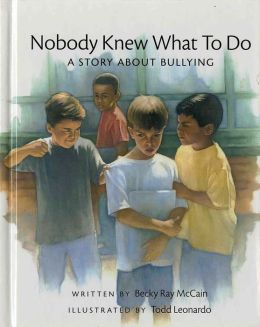
Nobody Knew What to Do: A Story about Bullying

Another of my favorite primary grade bully lessons is based on the book Nobody Knew What to Do, by Becky Ray McCain.  In this book the storyteller watches Ray, a boy in his class, be bullied daily.  But our storyteller doesn't know what to do, so he stands by helplessly until the end of the story.  In this lesson we focus on how hurting someone's body is mean and not okay, what we can do to help, and how we can do it. Partner sharing and role play are important parts of this lesson.


Check out the lesson plan here


Reporting versus Tattling
Nobody Knew What to Do sets the stage to move smoothly into a follow-up lesson on reporting versus tattling and adding the concept of  "Let it go." (I was doing this lesson long before, Frozen.)  Primary age children often find it difficult to understand when they are tattling.  Developmentally, they are very concerned with following the rules and when they see someone breaking the rules, they feel the need to inform someone. Of course in their effort to show you they know what the rules are and they are following them, we end up with lots of tattling.  In this lesson, the difference in reporting and tattling is introduced in a chart.  American Sign Language sign for ignore and practice it as a series of situations are read to them.   Role playing and a card sort activity with a variety of situations on mats titled "REPORT/LET IT GO" help students consider if they know when to report and when to "let it go!"  The importance of following rules is discussed, as well as what to do when people do not follow the rules. Students learn if no one is being hurt we need to "let it go."

My students and I have enjoyed these lessons.  I hope you and your students will too!

The lessons shared today are based on lessons from the book, How to Bullyproof Your Classroom by Caltha Crowe.  This Responsive Classroom book is one of my favorites and is an excellent resource to have in your counselor library. I highly recommend the purchase of this book. Not only does it contain 10 wonderful literature based lessons about bullying at the end, but it is filled with important and practical ideas for sharing with teachers on how they can address mean behaviors in the classroom before they become bully behaviors.